It is two principles, in particular, that govern the interactions within a ministry: Each unit has a distinct remit assigned to it (division structure), and the individual units communicate and...
Press contact If you are a journalist, please contact the Ministry's press office. +49 30-18441-2442 or -2225 (nationwide local rate) pressestelle(at)bmg.bund.de Federal Ministry of Health Press...
In Germany, the Standing Committee on Vaccination (STIKO) prepares vaccination recommendations and recommendations on specific prevention measures (such as administering antibodies) for children,...
Migration and integration The demographic changes in Germany, the large number of people with a migration history who have been living in Germany for many years and the intensive skilled labour...
The decision to draft an international Pandemic Accord was adopted at a World Health Assembly Special Session in December 2021 by the 194 member states of the World Health Organization (WHO),...
What is long-term care insurance? Long-term care insurance was introduced on 1 January 1995 as an independent branch of social insurance. All persons with statutory or private health insurance are...
Duration and objectives EU4Health, as a financing instrument under the Multiannual Financial Framework (MFF) 2021-2027, will run for a period of 7 years with a total funding volume of approximately...
What are the objectives of the Cannabis Act and how does it ensure child, youth and health protection? What is prohibited and what is permitted and to what extent? You can find answers to these and...
Solidarity as a matter of principle The SHI funds operate based on the principle of solidarity: Contributions are determined by the members’ financial capacities, while insurance benefits are the...
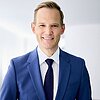
Open image in enlarged view Curriculum vitae Born on 10 August 1977 in Paderborn. Professional career: 2026–present: Federal Minister of Health 2009–present: Member of the German Bundestag...